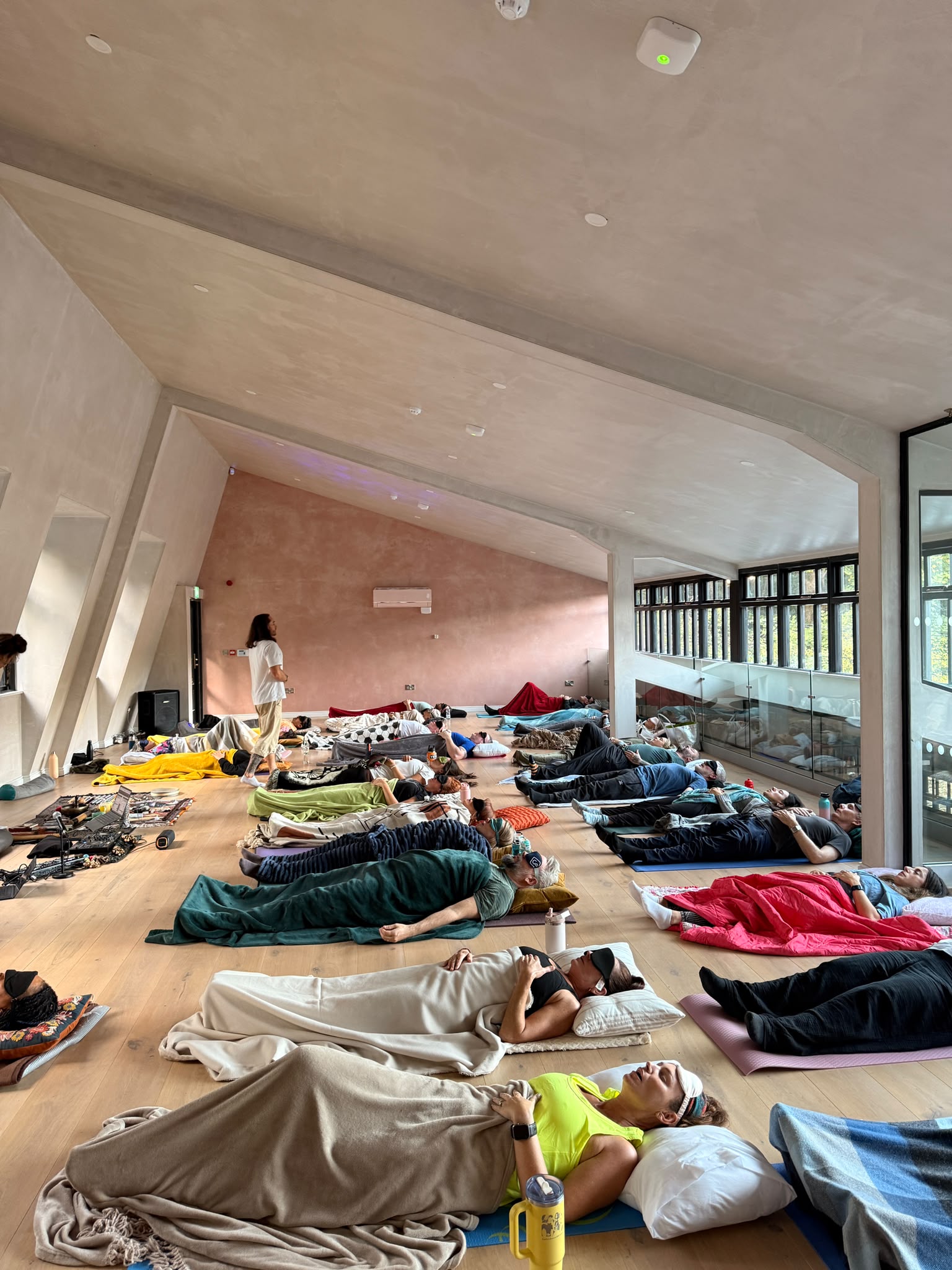
For a long time I thought of breathwork as something I went to. I would arrive at a session, lie down, follow the guidance and leave feeling a little softer, and for a while that was enough. Something different began to happen when I started learning it properly, and I want to share a little about that here, because when people ask me about breathwork training they usually ask about the facilitation side, the techniques and the structure, and less often about what the learning itself asks of you and quietly gives back.
Moving from attending to learning
Attending a session is a lovely thing, and I still do it as often as I can. Someone else holds the room, so you get to let go of the details and simply be with your own breath. Learning to facilitate asks you to stay with a much wider picture, which includes your own breath, the people in front of you, the pacing of the practice and the small signals that tell you when to slow down. That shift in attention slowly finds its way into ordinary life, often before you notice it happening.
I found I was paying attention to my breathing in conversations and in the moments just before I said something I might regret. I wasn’t trying to manage it or control it, and I was simply more aware of it, which gave me a little more room to choose how I wanted to respond.
How it changes the way you listen
A big part of breathwork training is learning to listen without rushing to fix. When someone shares something tender after a session, the instinct can be to offer advice or reassurance, and so much of the work is learning to stay present and let them be the authority on their own experience. You begin to hear the pauses in what people say and the breath that comes before the words, and you start to trust that they don’t need you to make it better.
I noticed this change with the people closest to me first. A friend would tell me about a hard week and I would catch myself reaching for a solution, and then I’d feel my own breath and stay with them a little longer instead. Those conversations became gentler, and I think people felt more met, which is something I’m still learning and probably always will be.
Meeting yourself with more honesty
Learning breathwork properly means practising a great deal yourself, often in a group where others see you as you are. Over the months you meet the part of you that wants to get everything right, and alongside it the part that is simply tired and would like to rest, and a good training gives you the space and support to be kind to both.
None of this happens quickly, and it isn’t meant to. The breath has its own pace, and so do we, and I’ve come to trust that the slower learning tends to be the learning that stays.
Why facilitation can’t be rushed
I often hear of weekend courses that offer a certificate by Sunday evening, and I understand the appeal, because life is full and time is precious. What I’ve seen, though, is that holding space for other people’s breath asks for a kind of steadiness that grows slowly. It takes time to practise and to make small mistakes in a supportive setting, and it takes time to learn about the nervous system, contraindications and trauma well enough to keep people safe. You also need time for your own experience to settle, because the way you hold others comes from the way you’ve learned to hold yourself.
This is something Rio and I feel strongly about at Riomattá, so our 300-hour Trauma-Informed Breathwork Facilitator Certification unfolds over eight months. We meet live online on Monday evenings, which lets the learning sit alongside real life, and then we spend 11 days together in person in Muğla, Turkey, where students can deepen their facilitation skills and their own practice with the breath. We keep each group to 20 people so that everyone is seen and nobody gets lost in the room.
If you feel drawn to it
Not everyone who loves breathwork needs to train as a facilitator, and that’s completely fine. Coming to sessions regularly can be a deep and nourishing practice in its own right, and if that’s where you are, you’re always welcome at The Weekly Reset. If you’ve been feeling a quieter pull to learn the breath more fully, for your own life or to share it with others one day, I’d simply invite you to sit with that for a while and notice what your body says.
You’re welcome to read more about the certification at riomatta.com, and if it feels right, you can book a relaxed 30-minute discovery call with Rio and me. There’s no pressure on that call, and it’s simply a chance to talk through your questions and get a sense of whether this is the right time for you. We’re always happy to hear from people, wherever they are with it.